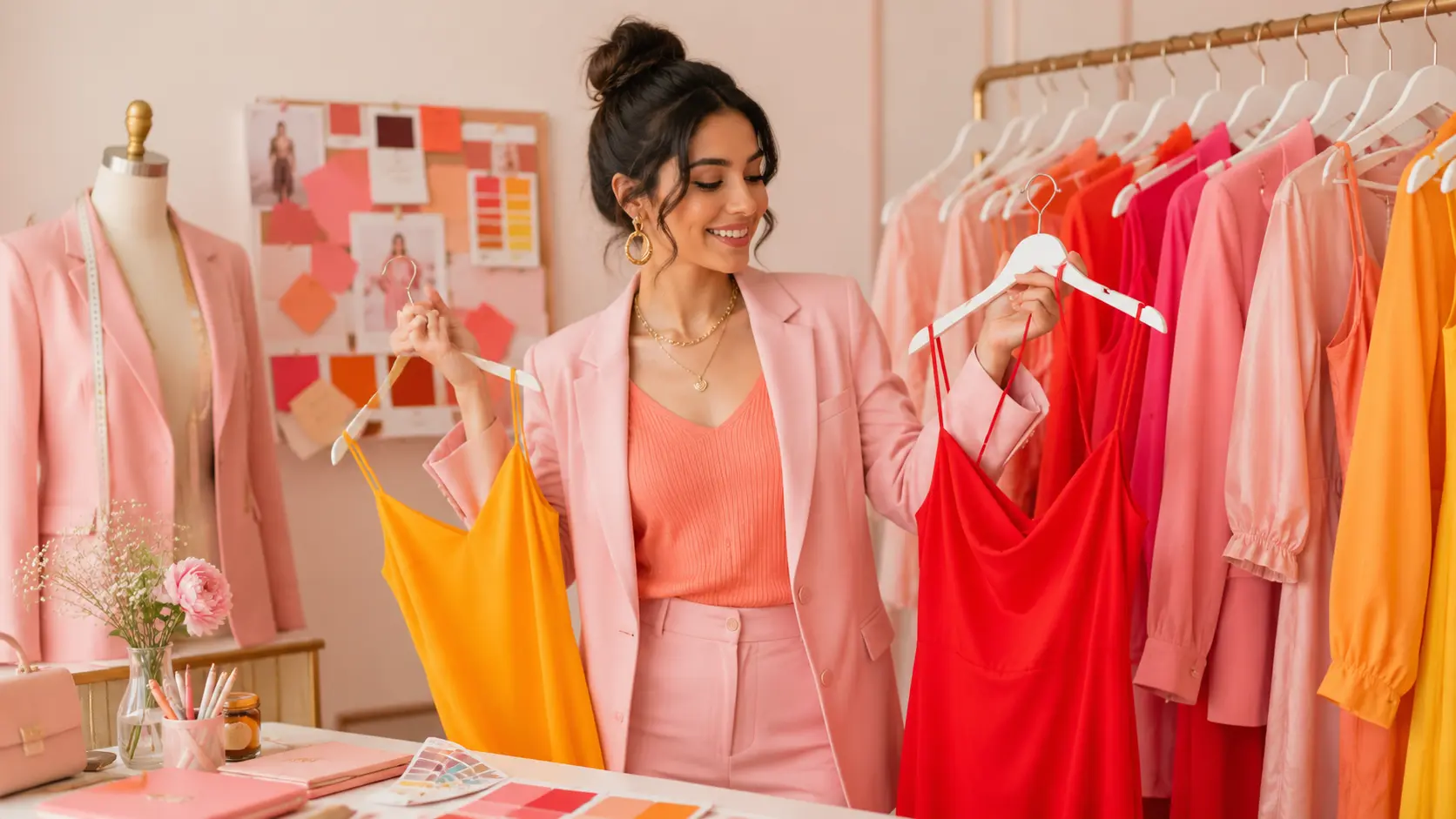
Well, it did not take AI long to pick up the traditionally slow adoption pace of the fashion industry. It was not thrilling at first, but it has become exciting quickly enough. While online shopping increased the demand for innovative solutions, AI has paved the way for a myriad of possibilities.
One of the most interesting advancements is the AI clothes swap app, which allows customers to explore their style sense and experiment with new trends without ever putting on a physical garment. Wondering how a cheetah print gown would look on you? Swap clothes with AI and find the right attire in seconds. Now let us explore the business side of AI in the fashion industry: the specific ways brands, retailers, and small operators are using this technology to grow revenue, cut costs, and win in a category where the traditional playbook stopped scaling years ago.
Why the Slower Adoption of AI in Fashion?
Like any other industry, the fashion industry has its own complexities and challenges when it comes to the AI revolution. The fashion business has always been driven by human expertise, creativity, and expression. Human intuition and artistic vision shaped the traditions of this industry, further complicating AI automation.
With a plethora of trends, designs, styles, body types, preferences, and cultural differences diversifying these businesses, predicting consumer behaviour and preference remains highly subjective. Additionally, the data needed for AI has to be structured, which has not historically been the case with fashion-related data. A business could have sales, socials, inventory, and customer preference data in isolated silos, raising the cost of implementation significantly.
Beyond the technical hurdles, consumer behaviour played a pivotal role in slowing adoption. Virtual try-on apps have been around for some time, but earlier consumers did not trust AI results. However, with the improved user experience and photorealism of modern apps like the AI Clothes Changer the tide is finally turning in favour of AI, and the brands moving now are the ones capturing the compounding advantage before the market fully catches up.
The shift is worth understanding from both sides. Consumers are more willing to trust AI previews because the output has become good enough to actually inform a purchase decision rather than just entertain. Brands are more willing to invest because the ROI on virtual try-on infrastructure is now clearly measurable in reduced return rates and improved conversion metrics. Neither side would have moved without the other, but both moved in the same eighteen-month window, which is why fashion is currently one of the fastest-growing categories for AI adoption.
10 Ways to Use AI Clothes Swap in Business
1. Virtual Try-Ons and Online Retailers
Online shopping was a revolution of its own in fashion. It saved customers from travelling to a physical store just for an outfit. However, one major issue remained: customers cannot actually try on outfits until they are delivered. This gap results in customer frustration and increased refund requests. With AI clothes swap apps, online businesses can close that gap directly.
Advanced algorithms superimpose outfits onto a customer's image and create a realistic version of them wearing the chosen fit. Retailers can provide a seamless pre-purchase preview experience that measurably increases customer satisfaction and lowers return rates. Customers feel more confident about their purchases, and businesses enhance interactions with personalised recommendations.
2. Fashion Personalisation With AI Outfit Generators
Today's customers seek individuality. They want products tailored to their specific style preferences. AI outfit generators take personalisation a step further with features that create outfits through prompts and images based on body shape, style, and colour scheme.
These AI outfit try-on apps showcase how a specific outfit will look on a specific customer, not a generic model. Customers can try a range of options, from casual wear to formal attire, and see themselves in each one before committing to a purchase. This kind of curated experience builds customer loyalty and improves product ratings because customers make informed decisions and shop with confidence.
3. Sustainability and Restyling
With clothes swap AI apps, customers can restyle and reuse different clothing items to create entirely new outfit combinations. Using reference images, customers can virtually pair pieces without the risk of a real-world style fail.
This helps brands appeal directly to the growing eco-conscious consumer base. By testing outfit combinations virtually, customers extend the practical lifespan of pieces they already own and reduce the pressure to buy new items for every occasion. For businesses, this opens up the opportunity to serve sustainability-focused buyers with products designed for longevity and versatility, which diversifies the customer base and strengthens the brand's positioning in an increasingly values-driven market.
4. Virtual Fitting Rooms in Retail
AI-powered virtual fitting rooms let shoppers try on clothes without physically touching them. Similar to clothes swap technology, virtual fitting rooms create a 3D representation of the customer's body with accurate measurements as they stand in front of a camera or smart mirror in the store.
The AI overlays the selected outfit and generates a realistic preview of that customer wearing the item. It can even suggest the right size based on measurements and offer colour variations to try on. For businesses, this technology improves in-store engagement and foot traffic while reducing the physical wear on inventory that comes from repeated try-ons of high-value items.
5. Clothes Swap AI Apps for Small Businesses
For small and medium-sized businesses, standing out in an overcrowded fashion industry is genuinely difficult. But innovative AI clothes swap apps give smaller brands significant leverage over large but technologically slower competitors.
These apps help boost sales and improve customer satisfaction through virtual try-on experiences without the overhead of a physical retail footprint. Small brands can also streamline content creation and keep it fresh without additional effort, generating studio-grade product images at a fraction of the cost and time of traditional photography without hiring photographers, models, or renting locations. For a full workflow covering how small fashion brands produce AI-powered ad creative at scale, our How to Use AI for Clothing Ads covers the complete pipeline.
6. Trend Prediction and Inventory Management
AI can predict trends and future style directions with genuine precision, gathering and evaluating large data sets from fashion platforms, social channels, and search behaviour to forecast where the market is heading. Brands using clothes swap AI apps in this context get a head start on their competitors: they can validate concepts against virtual try-ons before committing to production, and launch products earlier with confidence in demand.
Combined with virtual fitting rooms, this also ensures inventory remains undamaged regardless of how many shoppers try items on virtually. With reduced return rates from better fit prediction, brands maintain more stable inventory levels and lower reverse logistics costs across the whole operation.
7. Virtual Fashion Shows and Events
Runways and fashion shows are at the heart of any fashion brand identity. But these events carry heavy costs: studios, locations, models, and full production teams. With AI clothes swap apps, small and medium-sized businesses can host fashion events without the physical constraints.
These apps enable brands to showcase collections in high visual quality to a wider audience than a physical event could ever reach. Customers can even try featured looks virtually and provide direct feedback, which turns a broadcast event into a two-way engagement opportunity. Virtual fashion shows give businesses an affordable way to connect with customers without worrying about location, production overhead, or seating limits.
8. AI Clothes Swap Apps for Rental Businesses
Renting outfits for special events and ceremonies has become a significant trend in recent years. Rental businesses let customers enjoy high-quality fashion without spending large sums on single-wear pieces. With AI clothes swap apps, rental businesses can streamline the entire selection process with tailored suggestions and zero physical inventory wear from try-ons.
These apps help rental businesses maintain their available stock without running out of size or colour options on the shelf. They also track what is trending among customers in real time, which informs purchasing decisions for the next season's inventory. The result is greater convenience for customers, better personalisation of the rental experience, and a more efficient inventory operation.
9. Data-Based Marketing Campaigns
Marketing is about how well you connect with your audience. With clothes swap AI apps, brands acquire accurate data and insights on customer preferences, trending styles, and interaction patterns to strategise more effective marketing campaigns.
A tailored marketing campaign resonates with the right audience, resulting in higher ROI, better customer engagement, and stronger overall sales. The more you understand your audience, the stronger your position in the fashion industry. For brands running paid social specifically alongside their AI-powered campaign creative, our 7 Best AI Ad Tools for Creative Content Creation covers the wider toolkit that pairs directly with clothes swap output.
10. Virtual Styling Assistants
Styling an outfit remains one of the underrated daily struggles for most people. With an AI clothes swap app, customers can try multiple outfits and pick the one that suits them best without leaving their home. Pair this with the AI Hairstyle Changer to test different hairstyles alongside the selected outfit and get a complete look preview before any real-world commitment.
For businesses, offering this kind of comprehensive styling assistance personalises the shopping experience and strengthens customer loyalty. Customers who feel guided through a complete styling journey return more often, spend more per visit, and refer more actively than customers who make purchases in isolation.
Start Using AI Clothes Swap in Your Business Free
Conclusion
Let us face it: AI in fashion was inevitable. This is what customers wanted. If you think only traditional methods can keep your brand successful, think again. AI is not a fleeting trend. It is what the future of the fashion industry actually looks like.
The ten use cases above are all executable today with the right tooling. Small brands adopting clothes swap AI apps early are building compounding advantages against larger competitors moving more slowly. Rental businesses using the technology are running more efficient operations with better customer experiences. Retailers deploying virtual try-ons are seeing measurable improvements in conversion rates and reductions in return rates. This is not future potential. This is what is happening in the category right now.
So, go ahead and embrace it. Let the algorithms be your trendsetters, and clothes swap AI apps be your virtual sales assistants. Start with one use case that fits your specific business, get the workflow working, then expand from there as you learn what your customers actually respond to.
Try Templix AI Clothes Changer Free
Frequently Asked Questions
What is the Templix AI Clothes Changer?
The Templix AI Clothes Changer is an AI-powered tool that lets users swap outfits on any photo with realistic, photoreal results. Upload your photo, select or describe the outfit you want to try on, and the AI generates a natural-looking preview of you wearing that outfit. It works across a wide range of clothing styles, from casual wear to formal attire.
Is the Templix AI Clothes Changer free to use?
Yes. Templix offers free credits on signup so you can test the AI Clothes Changer and every other tool on the platform at no cost. Paid plans unlock higher credit volumes and priority processing for brands and creators producing at scale.
Can businesses use Templix AI Clothes Changer commercially?
Yes. Output generated through Templix is available for commercial use across ecommerce product pages, brand campaigns, social content, virtual try-on features on your website, and paid advertising. This applies to output from the AI Clothes Changer and every other tool on the platform.
How does an AI clothes swap improve online shopping conversion?
Virtual try-on functionality reduces the biggest friction point in online fashion shopping: uncertainty about how an outfit will actually look on the customer. Customers who preview an outfit virtually before purchase are significantly more likely to complete the transaction and less likely to return the item, which directly improves both conversion rate and unit economics for online retailers.
What kinds of businesses benefit most from clothes swap AI apps?
Online fashion retailers, small independent brands, rental businesses, department stores with virtual fitting infrastructure, and any brand with a strong social media component all see meaningful benefits. The tool also fits well for stylists offering virtual consultation services and fashion educators demonstrating styling principles across different body types and preferences.
Can I use Templix AI Clothes Changer for ecommerce product photography?
Yes. Many small fashion brands use the tool to generate professional-quality product imagery without hiring photographers, models, or renting studios. The output is suitable for product pages, catalogue imagery, and social media content, and it can be produced at a fraction of the cost and turnaround time of traditional shoots.
What image formats does Templix AI Clothes Changer accept?
Templix accepts common image formats including JPG, PNG, and WebP. Higher-resolution source images produce noticeably better swap results, so upload the best-quality photo you have available for the strongest output.
How does the Templix AI Clothes Changer compare to physical try-on?
The AI Clothes Changer will not replace physical try-on for every customer, but it dramatically reduces the frequency at which physical try-on is needed. Customers who use virtual preview to narrow their selection before requesting samples or visiting a store consistently make faster, more confident final decisions than customers relying on descriptions and product images alone.
Can I combine AI clothes swap with other Templix tools for a full campaign?
Yes. Pair the AI Clothes Changer with the Templix Ad Studio to package finished outfit visuals as complete and creative, and combine with the Templix AI Face Swap to lock a consistent presenter identity across a full seasonal campaign. Everything runs from the same Templix subscription without needing to move files between platforms.
What is the biggest business advantage of adopting clothes swap AI early?
Compounding brand recognition and creative efficiency. Brands that adopt AI-powered clothes swap workflows now are producing more visual content, testing more campaign variations, and iterating faster than competitors moving slowly. Twelve to eighteen months of compounded advantage in creative output, customer experience, and campaign learning is difficult for late adopters to close once it takes hold.

Zain Abbas
Zain Abbas writes Templix's technical and enterprise content, from developer tooling and MCP servers to team workflows, product guides, and AI app integrations.