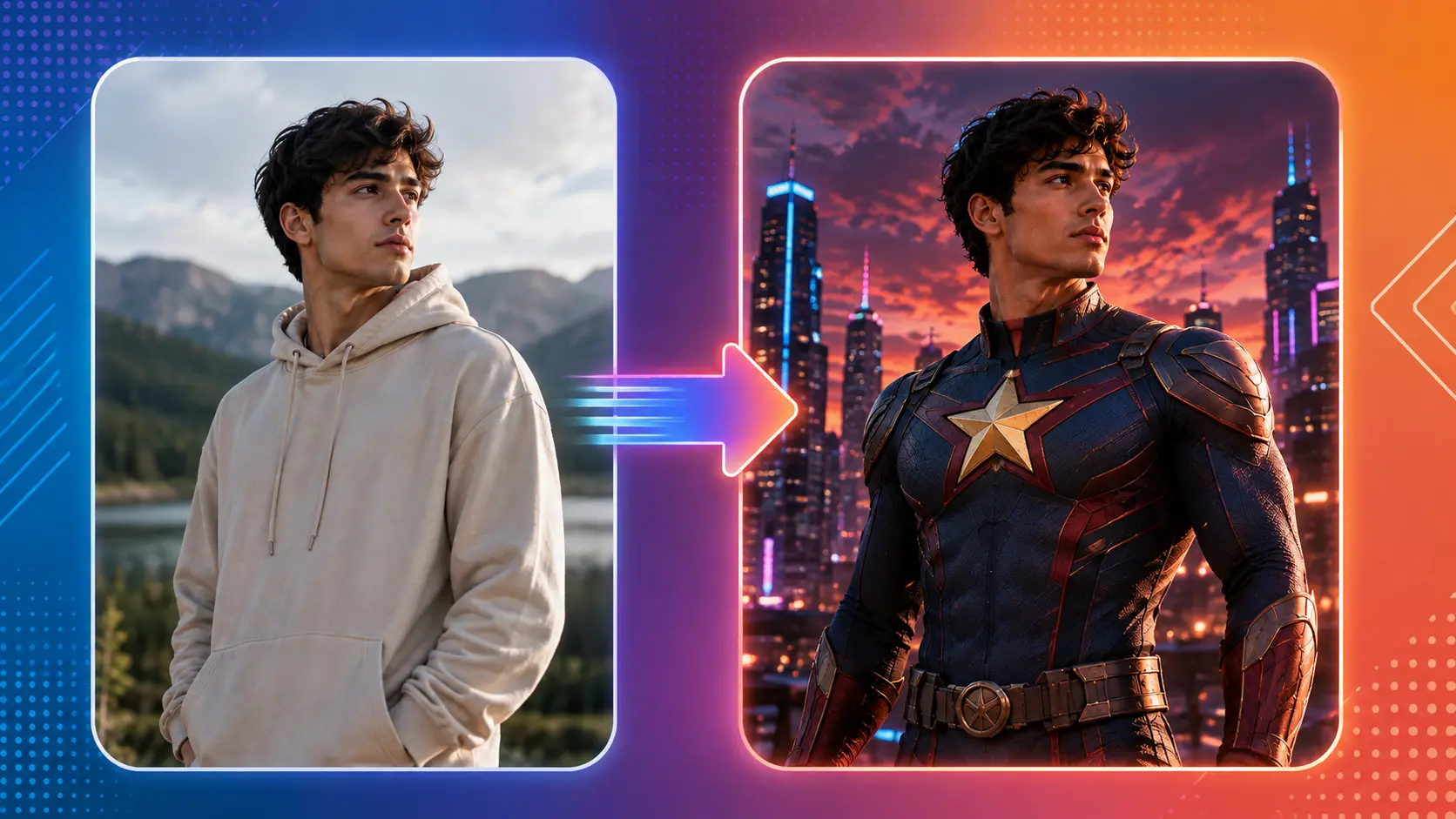
Every great superhero universe started as a sketch. Someone had an idea for a character, drew a rough version, refined the look over dozens of iterations, and eventually landed on the visual identity that made the character iconic. That creative process used to be reserved for professional illustrators with years of anatomical drawing training, colour theory expertise, and enough digital painting hours to render a finished character concept from a rough idea.
The AI superhero art generation has changed that access equation completely. What used to require a skilled illustrator and hours of manual painting per concept now happens in seconds. Anyone with an original character idea can generate a polished visual representation of that hero in minutes rather than months, iterate through dozens of costume and pose variations, and land on a final design that would previously have required significant creative budget or freelance illustration work.
The Templix AI Superhero Art Generator is built specifically for this creative use case: turning your own original superhero ideas into finished visual concepts. This guide covers what the tool does, who it fits, how to get the strongest original character designs from it, and the important legal considerations that matter whenever superhero-style content enters the picture.
What Is the Templix AI Superhero Art Generator?
The Templix AI Superhero Art Generator is an AI-powered creative tool that generates original superhero character art from a text description or a reference image. Describe your original hero (powers, costume design, silhouette, personality, backdrop) and the AI produces a polished visual representation in seconds without any drawing or digital painting skills required.
The tool is designed specifically for creating original characters rather than reproducing existing copyrighted superheroes. This distinction matters both legally and creatively: original superhero concepts are yours to publish, license, and build a universe around, while unlicensed reproductions of trademarked characters carry meaningful legal risk regardless of how they were produced.
Templix runs the Superhero Art Generator inside the wider creative suite, which means generated concepts can flow directly into other Templix workflows without moving files between platforms. Once you have a strong character design, the same file can move into background changes for varied scene work, image upscaling for print or large-format use, or the wider image editing tools for costume iteration and detail refinement.
Free credits on signup mean you can test the tool on your own character concepts at no cost before committing to a paid plan. That matters especially for character design work because the value of the tool depends heavily on whether it produces designs that actually match the character in your head rather than generic hero silhouettes.
How AI Superhero Art Generation Actually Works
Understanding how the model works helps set the right expectations for what you can and cannot ask it to do.
The AI has been trained on a large dataset of illustrated character art, concept design work, and figure studies. During training, the model learned the visual patterns that define character illustration: anatomical proportions across different body types, costume design principles (silhouette, colour theory, functional detail), dynamic pose composition, lighting and rendering styles, and the specific visual conventions that separate hero design from villain design or civilian character design.
When you describe a character in the prompt, the AI performs several operations in sequence. It parses the description into visual components (physical build, costume elements, colour palette, pose, environment). It generates a coherent character design that fits those components together in a way that reads as a single deliberate character rather than a random combination of features. It applies the illustration style you specified (comic book, painterly, cel-shaded, photorealistic) and renders the final image.
The distinction between good and mediocre AI character generation lives in how well the model handles the coherent-character requirement. Basic image models often produce output that has all the requested elements but reads as random rather than deliberate. Better tools including the underlying models the Templix Superhero Art Generator draws on produce characters that look like a single artist made deliberate design decisions across every element.
Key Features of the Templix AI Superhero Art Generator
Six specific capabilities define what the tool does well for original character work.
Prompt-based character design: Describe your original hero in plain language covering powers, costume, colour palette, silhouette, environment, and mood. The tool interprets your description and generates a matching character concept rather than picking from preset templates.
Multiple illustration styles: From comic-book classics through painterly editorial through modern cel-shaded animation styles, the tool covers the main visual languages that superhero art uses. Match the style to your project rather than being locked into one aesthetic.
Costume and design iteration: Generate multiple variations of the same character with different costume elements, colour palettes, or design directions. Compare variations side by side and land on the final design faster than manual sketching would allow.
Pose and action variation: The tool handles static hero portraits (character sheets, cover art) and dynamic action poses (mid-flight, mid-fight, mid-transformation) equally well when the prompt specifies the pose clearly.
Fast processing: Most character generations complete within seconds, which makes rapid iteration practical rather than blocking. Testing five costume variations for a single character takes minutes rather than the days manual illustration would require.
Commercial-use output: Original character designs generated on Templix are available for commercial use across indie comics, game concept art, book covers, branded content, personal creative projects, and any other commercial application. You retain full ownership of the original character designs you create.
Use Cases for the Templix AI Superhero Art Generator
Six specific creative use cases consistently produce strong results.
Indie comic book character design: Independent comic creators use the tool to generate concept art for their original heroes without commissioning a freelance illustrator for every design iteration. This is the single most common professional use case, and the tool fits particularly well because comic development requires many iterations before the final character design lands.
Game concept art for indie developers: Independent game studios and solo developers use the tool to generate character concept art for original hero characters in RPGs, action games, and superhero-genre indie projects. The output serves as reference material for 3D artists, or as final 2D character art in games where illustrated hero portraits fit the aesthetic.
Book cover and editorial illustration for original superhero fiction: Novelists writing original superhero fiction use the tool to generate cover art, chapter illustrations, and marketing visuals featuring their own characters. This closes a genuine cost gap for self-published authors who cannot justify commissioning custom illustration for every cover iteration.
Personal creative projects and character world-building: Writers, world-builders, and hobbyist creators use the tool to bring their original characters to life visually. A character that existed only as words on a page becomes a visual reference that supports ongoing creative development. For creators combining character design with wider stylised illustration workflows, our AI Cartoon Generator covers the animated and cartoon-style illustration side of the same creative workflow.
Concept art for tabletop RPG characters: Players and game masters creating original characters for tabletop RPGs use the tool to generate visual references for their heroes. This adds significantly to the immersive experience of long-form campaign play and gives players something concrete to share with their group.
Portrait-style hero designs for personal use: Some creators use the tool to design a personal superhero version of themselves, family members, or friends. Combined with the AI Face Swap for adding a specific face to a generated hero body, this creates highly personalised character art for gifts, personal branding, or creative fun.
How to Use the Templix AI Superhero Art Generator
The workflow is straightforward. Most character generations complete end to end in under a minute.
Step 1: Open the Templix Superhero Art Generator: Head to Templix and select the Superhero Art Generator from the app directory. New users can sign up for free credits without needing a card. Existing users can head straight to the app and start describing their character.
Step 2: Describe your original character: Write a prompt covering the specific character you want to create. Include physical build, costume design, colour palette, powers or ability indicators (visual effects, energy auras, elemental themes), pose, environment, and mood. Detailed prompts consistently produce stronger results than vague ones. A prompt like "athletic female hero, sleek black and silver bodysuit with geometric silver accents, silver domino mask, standing on a rain-slick city rooftop, dynamic three-quarter pose, night lighting with neon rim light, comic book illustration style" produces a stronger character than "female superhero at night."
Step 3: Choose your style: The tool supports multiple illustration styles including comic book, painterly editorial, cel-shaded animation, and photorealistic character rendering. Match the style to your project's overall aesthetic rather than defaulting to the same style for every generation.
Step 4: Generate and iterate: Click generate and let the AI process the character. Most generations complete within seconds. Review the output, refine the prompt if needed (adjust costume elements, change pose, tweak colour palette), and regenerate until the character matches your creative direction.
Step 5: Continue the workflow: Once you have a strong character design, the same file flows directly into other Templix tools without downloading and re-uploading. Change backgrounds for scene variety, upscale for print resolution, iterate costume details through the wider image editor, or extend the character into a full concept art series.
Design Tips for Compelling Original Superhero Characters
The strongest original superhero designs share a small number of specific characteristics. Applying these consistently makes AI-generated character work read as intentional design rather than random assemblage.
Start with a silhouette: The best superhero characters are recognisable in silhouette alone. Before generating detailed costume elements, decide what shape the character reads as from a distance. Your original character needs a distinctive silhouette to hold up in visual identity work, so specify the silhouette in your prompt explicitly.
Anchor the colour palette to two or three colours maximum: Iconic hero designs almost always work from a limited palette. More than three primary colours tends to muddy the visual identity. Specify your palette explicitly in the prompt rather than leaving it to the AI to interpret.
Match costume design to character powers: A character with fire powers should have visual costume elements that reference fire. A speedster character should have costume elements suggesting motion. This visual-narrative coherence separates strong character design from generic hero silhouettes.
Include a specific pose in the prompt: Static portrait poses work for character sheets and reference art. Dynamic action poses work for cover art and hero moments. Specify which one you want rather than letting the AI default to a generic standing pose.
Consider the character's personality in the design: A grim vigilante should read differently from an optimistic golden-age hero. Name the character's personality tone in the prompt (heroic, brooding, mischievous, tragic, comedic) so the design supports the character narrative.
Iterate deliberately, not randomly: Instead of regenerating with the same prompt and hoping for different results, change specific elements between generations. Systematic variation produces stronger final results than random re-rolls. For deeper prompt structure that consistently produces cleaner character results across every generation, our JSON Prompting for AI Image Generation guide covers the structured approach that outperforms free-text prompts.
Legal and Ethical Considerations
This section matters more than any design tip. Superhero content sits in one of the most heavily protected corners of intellectual property, and how you use AI superhero art tools directly affects your legal exposure.
Create original characters: Do not attempt to generate existing copyrighted heroes, Spider-Man, Batman, Superman, Wonder Woman, Iron Man, Captain America, and essentially every recognizable superhero name is a trademarked property owned by Disney/Marvel, DC/Warner Bros, or another major rights holder. Generating imagery of these characters, even for personal use, may constitute copyright and trademark infringement depending on how the imagery is used. Distributing or selling that content dramatically increases the legal risk.
Original character designs are yours: Characters you create from scratch, with original names, original costume designs, original powers, and original visual identities, are yours to publish, license, and commercialise. This is the entire creative model indie comic creators, novelists, and game developers have operated under for decades. AI generation does not change that: your original character remains your original character regardless of whether you drew it manually or generated it through AI.
Avoid designs that could be confused with existing characters: Even without using a copyrighted name, designs that closely mimic the specific costume, colour palette, and silhouette of an existing famous character can draw trademark or copyright challenges. If your character reads as "Spider-Man but green," that similarity may cause problems even under a different name. Distinct visual identity matters.
Commercial use requires clean rights: If you plan to publish, sell, or license your generated character art, ensure the design does not incorporate elements from copyrighted characters. Commercial-use rights on Templix cover the AI generation, not any downstream IP issues introduced by user prompts that draw too heavily on protected characters.
Fan art has its own rules: Some rights holders tolerate non-commercial fan art. Others actively enforce against it. If you are creating fan art of existing characters for personal or non-commercial use, do so knowing that even permissive rights holders can change their enforcement approach at any time. The safest creative path is always original character design.
The Templix AI Superhero Art Generator is built for original creative work: your characters, your designs, your storytelling. Used that way, it opens up character concept work to creators who could not previously afford custom illustration. Used to reproduce copyrighted characters, it creates legal exposure the tool was never intended to enable.
Final Thoughts
The AI superhero art generation has genuinely opened original character design to a much wider group of creators. What used to require a professional illustrator and significant commission budgets now happens in seconds at a small fraction of the cost, which means indie comic creators, novelists, game developers, and hobbyist world-builders can all bring their original hero ideas to visual life without waiting for freelance illustrator availability.
The Templix AI Superhero Art Generator produces character designs strong enough for indie publication, game development, book covers, and personal creative projects. Combined with the wider Templix creative suite for background work, upscaling, and ongoing character iteration, it forms a complete original character design workflow inside a single subscription.
Start with one character you have been thinking about. Write out their concept in a few sentences. Generate the first version. Iterate on the specific elements that need work. Free credits on signup mean you can test the full workflow at no cost before committing to a paid plan.
Start Creating Original Heroes Free
Frequently Asked Questions
What is the Templix AI Superhero Art Generator?
The Templix AI Superhero Art Generator is an AI-powered creative tool that generates original superhero character art from text descriptions or reference images. Describe your original hero, and the AI produces a polished visual representation in seconds without any drawing or digital painting skills required.
Is the Templix Superhero Art Generator free to use?
Yes. Templix offers free credits on signup so you can test the Superhero Art Generator and every other tool on the platform at no cost. Paid plans unlock higher credit volumes and priority processing for creators producing multiple character designs or working on ongoing projects.
Can I use the generated superhero art commercially?
Yes, for original character designs you create. Original superhero art generated through Templix is available for commercial use across indie comics, game concept art, book covers, branded content, and any other commercial application. You retain full ownership of the original characters you create. This does not apply to designs that incorporate copyrighted or trademarked elements from existing characters.
Can I generate art of existing superheroes like Spider-Man or Batman?
No, and you should not try to. Spider-Man, Batman, Superman, and other iconic superheroes are protected by copyright and trademark law owned by Disney/Marvel, DC/Warner Bros, and other major rights holders. Generating imagery of these characters may constitute copyright or trademark infringement regardless of how the imagery was produced. The tool is designed and intended for original character creation, not reproduction of protected IP.
What kinds of characters work best with the tool?
Original characters with clear visual identity work best. Strong prompts include specific costume design, defined colour palette, distinctive silhouette, specific pose, matched environment, and a clear illustration style. Vague prompts (just "female superhero" or "hero in a city") produce generic output. The more specific your character concept, the stronger the generated result.
Can I create character sheets with multiple poses of the same character?
Yes, though character consistency across multiple generations is genuinely one of the harder problems in AI character work. Using the same detailed prompt across generations, reusing reference images, and describing the character with the same specific vocabulary each time all improve consistency. For heavily reference-dependent character series, testing multiple generations and picking the most consistent set is often the fastest path to a workable character sheet.
What image formats does the Superhero Art Generator accept and export?
Templix accepts common image formats including JPG, PNG, and WebP for reference input, and generates output in standard image formats suitable for downstream use in design tools, comic layout software, and publication workflows.
Can I use this for tabletop RPG character art?
Yes. Character art for tabletop RPGs (D&D, Pathfinder, Marvel Multiverse, or original systems) is one of the strongest fits for the tool. Players creating original hero characters for long-form campaigns use it to generate visual references that add significantly to the immersive experience of shared play.
Can I combine the Superhero Art Generator with other Templix tools?
Yes. Once you have a strong character design, the file flows into other Templix tools without moving between platforms. Pair with the Templix Background Changer for scene variety, the AI Image Upscaler for print-resolution output, or the AI Cartoon Generator for stylised variations of your original hero across different illustration approaches.
What is the biggest advantage of AI superhero art generation over commissioning a freelance illustrator?
Speed, cost, and iteration flexibility. What used to require a freelance illustrator, a detailed brief, multiple revision rounds, and a meaningful budget can now happen in an afternoon at a tiny fraction of the cost. For indie creators, the compounding advantage is being able to test twenty character concepts in the time a single traditional commission would take, which improves both the quality of the final character design and the total volume of creative work possible per project.

Eman Raza
Eman Raza is Templix's prompt engineering expert, writing practical guides on image and video generation that help users turn ideas into striking visuals