
Scroll through any social feed and most of what you see isn't made by brands. It's made by people: a friend reviewing a new phone case, a stranger showing their skincare routine, a dad filming his kid's reaction to a new toy.
That's user-generated content, and it has become one of the most trusted forms of marketing online. When shoppers want to know if something is worth buying, they increasingly look for real people talking about it, not brand ads.
In this guide, we'll explain exactly what UGC is, the different forms it takes, how brands use it, the legal basics you should know, and how AI is changing the way creator-style content gets made.
What Is UGC?
UGC stands for user-generated content. It's any content, such as text, photos, videos, or audio, created by people rather than by the brand itself.
Those people might be customers, fans, everyday social media users, or independent creators. What makes it UGC is that the voice comes from outside the company. A brand's polished commercial isn't UGC. A customer's 20-second review filmed in their kitchen is.
You may also hear UGC called:
Consumer-generated content
Customer content
Creator content, when a brand pays a creator to make content in a natural, user-style format
The key idea behind every version is the same: content that feels like it comes from a real person, not a marketing department.
A Short History of UGC
UGC isn't new. Long before social media, people wrote letters to newspapers, posted on message boards, and shared opinions in online forums and product review sections.
What changed is scale and format. Blogs made everyone a publisher. YouTube made everyone a broadcaster. Instagram, TikTok, and YouTube Shorts turned short vertical video into the main way people share experiences. Today, a single honest product video from an everyday user can reach millions of people.
Brands noticed. Instead of only producing their own content, they started encouraging, collecting, and eventually commissioning content that looks and feels like it came from real users.
The Main Types of UGC
UGC comes in many formats, and they often overlap
Text UGC
Product reviews and star ratings
Comments on social posts and blogs
Forum discussions and Q&A answers
Social posts and threads about a brand
Text UGC is especially valuable on product pages, where reviews help shoppers make decisions.
Photo UGC
Customers posting photos of products they bought
Outfit pictures tagged with a clothing brand
Before-and-after photos
Branded hashtag challenges
Photo UGC shows products in real homes and real hands, not studio sets.
Video UGC
Unboxing videos
Product reviews and first impressions
Tutorials and how-to clips
"Get ready with me" and day-in-the-life videos
Testimonials and reaction videos
Video is now the most powerful UGC format for marketing, especially short vertical video for TikTok, Reels, and Shorts.
Audio UGC
Podcasts that discuss products or brands
User-created sounds and remixes on short-form platforms
Voiceovers and audio reviews
Organic UGC vs. Paid UGC vs. AI UGC
Not all UGC is created the same way. Understanding the differences helps you choose the right approach.
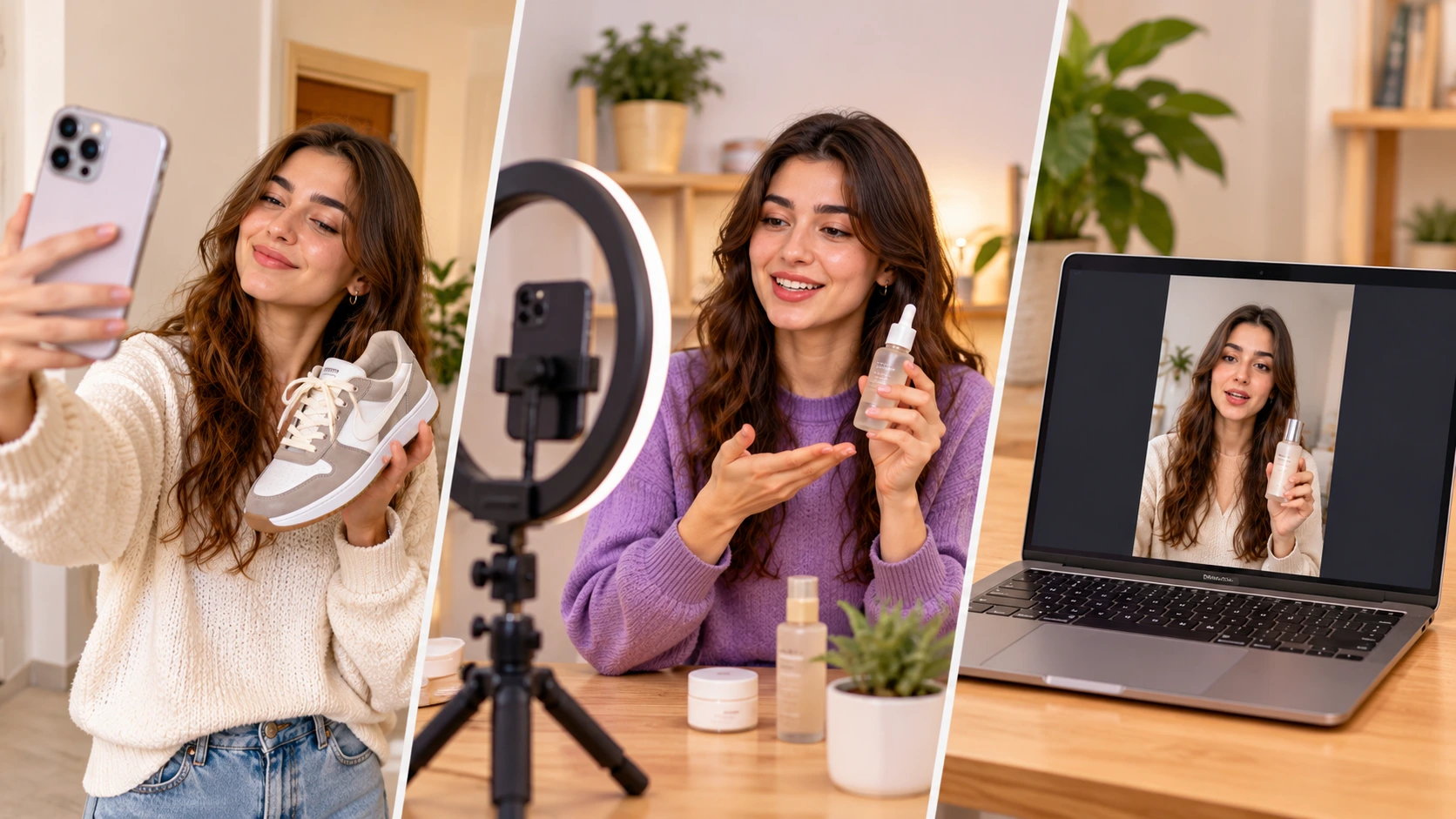
Organic UGC, paid creator UGC, and AI UGC compared.
Organic UGC
This is content customers create on their own, without being paid. A happy customer posts a photo of their new sneakers and tags the brand. It's the most authentic form of UGC, but you can't control when it appears, what it says, or how good it looks.
Paid or Creator UGC
Brands hire creators to produce content in a natural, user-style format. The creator films a review or demo as if they were a regular customer, and the brand uses it in ads or on social media. This gives more control and consistency, but it costs money per video and takes time to brief, ship products, and receive footage.
AI UGC
AI UGC uses AI actors and video models to recreate the look and feel of creator content without filming. You choose an AI creator, add your product, write a script, and generate a creator-style video. Tools like Templix AI UGC Studio make it possible to produce many variations quickly for testing.
One important note: AI UGC recreates the style of user content. It isn't a real customer's experience, so it should be used for demos, explainers, and creator-style ads, never presented as genuine customer testimonials.
Where UGC Lives: Common UGC Platforms
UGC can show up almost anywhere people share content online:
Social networks: Instagram, TikTok, Facebook, X, LinkedIn
Video platforms: YouTube and YouTube Shorts
Review sites and marketplaces: product reviews on online stores and app stores
Community platforms: forums, Reddit-style communities, and Q&A sites
Brand websites: review sections, customer galleries, and testimonial pages
Audio platforms: podcasts and audio-sharing apps
For most brands today, short-form video platforms are where UGC has the biggest impact.
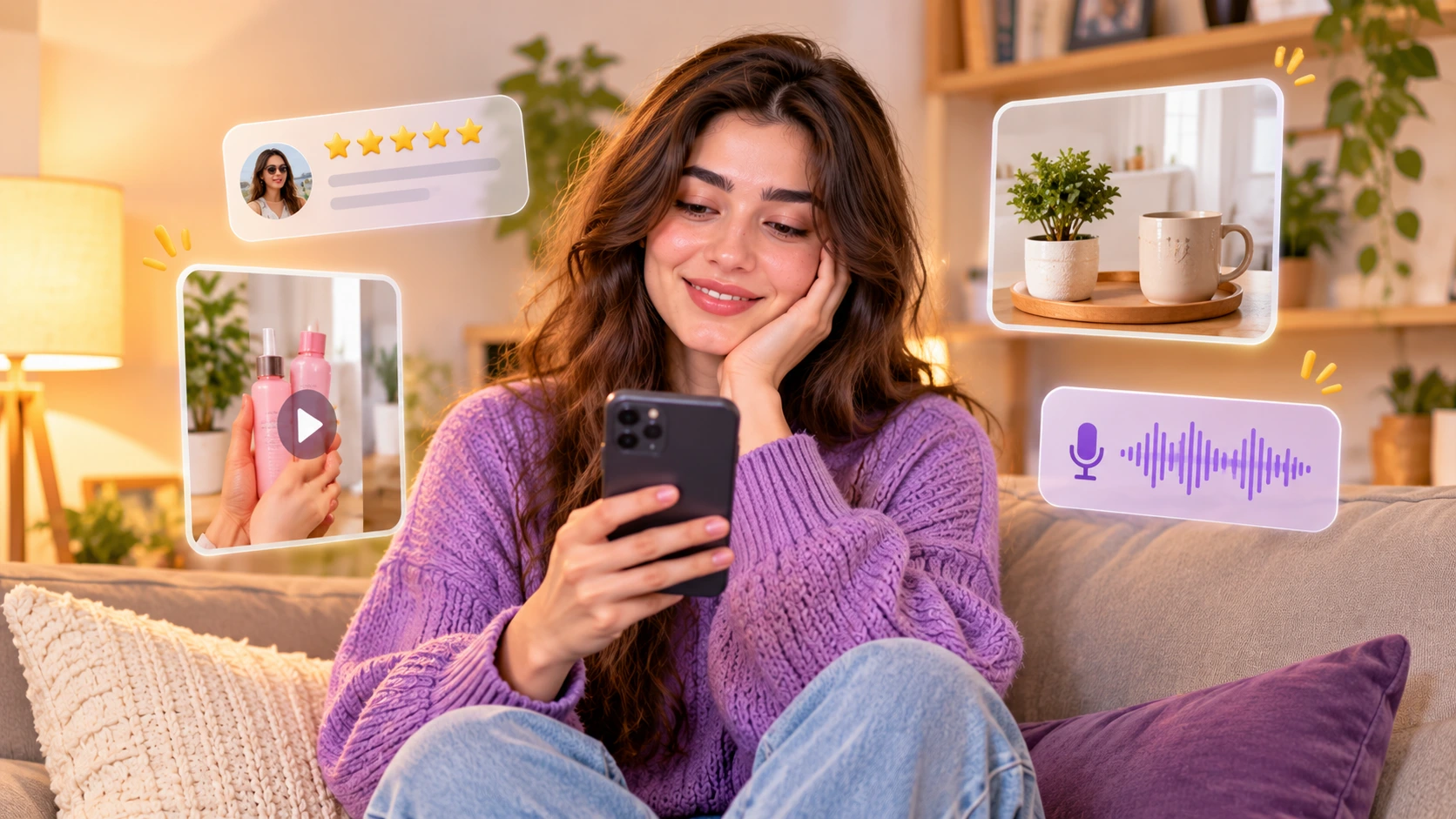
User-generated content across social, video, review, and audio platforms
Why UGC Works
People Trust People
Shoppers know brand ads are designed to sell. Content from real people feels more honest, which is why UGC often works as a modern form of word-of-mouth.
It Shows Products in Real Life
UGC shows how a product looks, fits, and works in everyday situations. That answers questions a studio photo can't.
It Blends Into Social Feeds
UGC-style videos look like the content people already enjoy watching, so they're less likely to be skipped as "just another ad."
It's More Affordable
Compared to full studio productions, UGC is usually cheaper and faster to produce, which makes it accessible for startups and small brands.
It Supports Testing
Because UGC is relatively quick to produce, brands can test different hooks, angles, and creators to find what actually drives results.
It Builds Community
When brands share and celebrate customer content, customers feel seen. That strengthens loyalty and encourages more people to create.
It Can Support SEO
Reviews, questions, and comments add fresh, relevant content to product pages, which can help them show up for more searches.
How Brands Use UGC
Here are the most common ways brands put UGC to work:
Paid social ads: UGC-style videos for TikTok, Reels, Shorts, and Meta ads.
Product pages: reviews, customer photos, and short demo videos near the "Add to cart" button.
Organic social media: reposting customer content with credit.
Email marketing: adding customer photos or reviews to newsletters and abandoned cart emails.
Landing pages: using testimonials and real-life videos to build trust.
App store pages: short creator-style videos that show the app in use.
Onboarding and tutorials: customer-made how-to content that helps new users.
Community campaigns: contests and hashtag challenges that invite people to create.
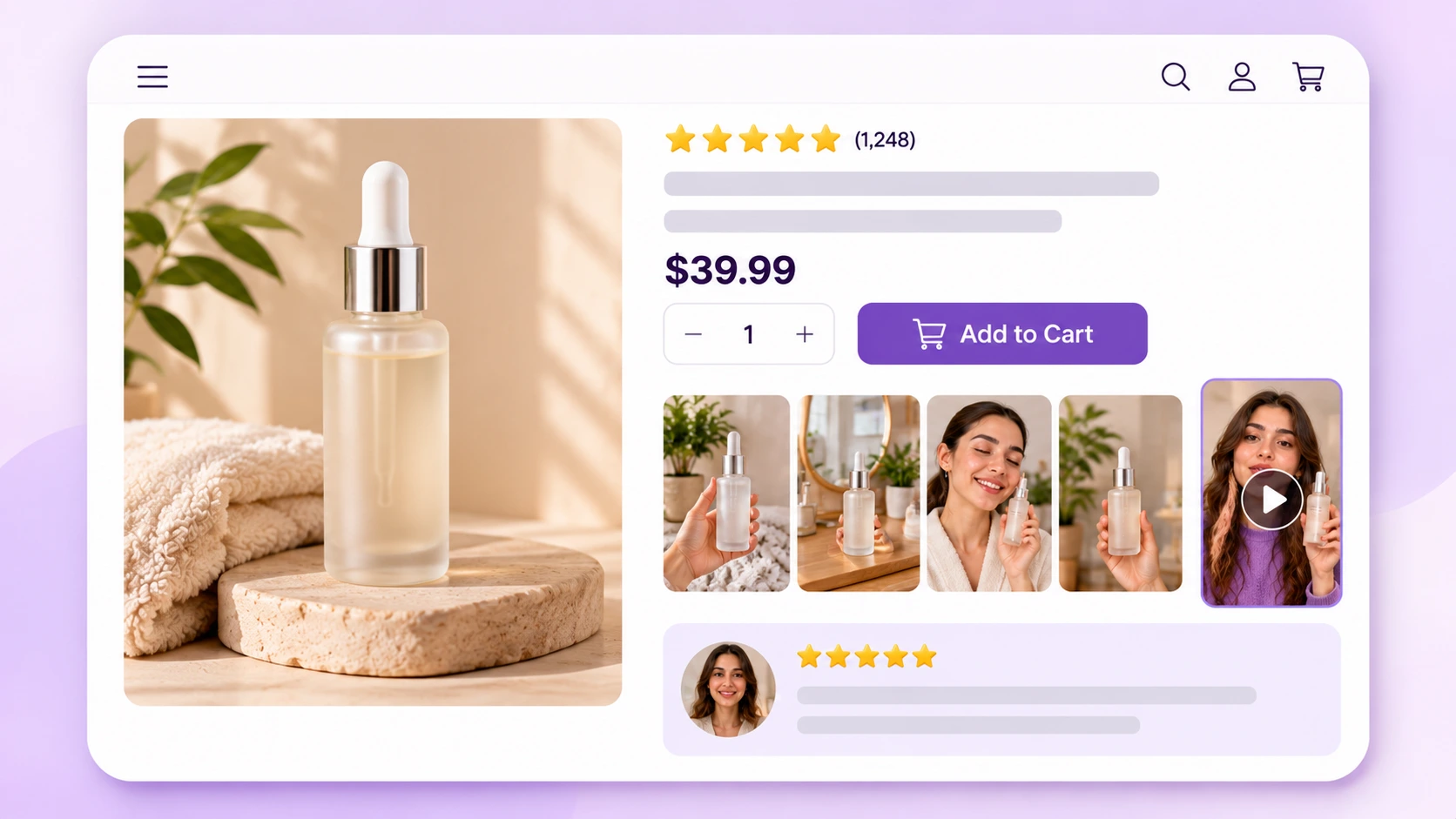
Product page using UGC photos, video, and reviews
UGC Ideas by Industry
Every category has UGC formats that feel natural for its audience. Here are a few starting points:
Beauty and skincare: Morning routines, "day 1 vs. day 30" comparisons, and close-up texture shots.
Fashion: Try-on hauls, "one item, three outfits," and fit checks in front of a mirror.
Food and drinks: First-taste reactions, simple recipes, and "what I eat in a day" clips.
Tech and gadgets: Unboxings, desk setups, and "one feature I use every day" demos.
Home and cleaning: Before-and-after cleaning videos and small-space organization tips.
Apps and software: Screen-recorded walkthroughs with a face-cam reaction showing the app solving a real problem.
Fitness and wellness: Workout routines, gym-bag essentials, and progress check-ins.
Pick one format that fits your product, test it, and expand once you see what your audience responds to.
How to Get UGC for Your Brand
1. Ask Your Customers
Send a follow-up email after purchase asking for a review, photo, or short video. Make it easy with a direct link and clear instructions.
2. Run Contests and Hashtag Campaigns
Invite customers to share content with a branded hashtag for a chance to win something. This creates a steady stream of content and buzz.
3. Engage With What People Already Post
Search for mentions and tags of your brand. Like, comment, and ask permission to share the best posts.
4. Work With UGC Creators
Hire creators to make UGC-style videos for your ads and social channels. This gives you more control over quality and messaging.
5. Create AI UGC Videos
When you need many variations quickly, or you're testing ideas before investing in creators, AI UGC is a fast option. You can create creator-style videos with AI actors in minutes and test different hooks against each other.
How to Create AI UGC Videos With Templix
Templix brings AI actors, video models, and UGC tools together in one place. Here's a simple workflow:
Step 1: Open the UGC Studio. Go to Templix UGC and choose what you want to create: UGC Video, UGC Ad Video, UGC Image, or UGC Character.
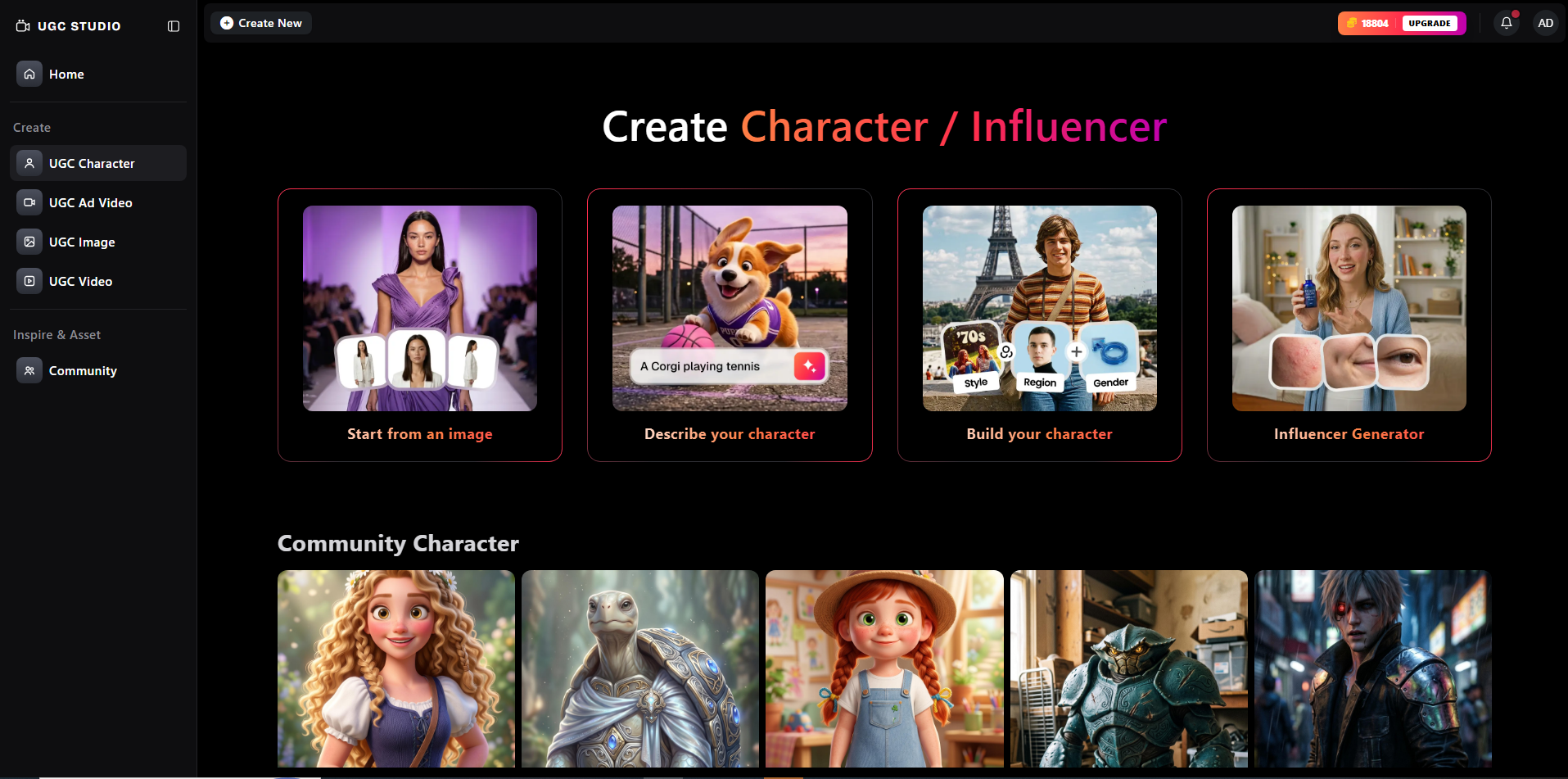
Step 2: Choose your creator. Browse 1,000+ AI actors, or create a custom AI creator you can reuse across campaigns.
Step 3: Add your product. Upload a product photo or paste a product URL into the UGC Video Generator.
Step 4: Describe the scene. Explain who is on camera, what they do with the product, and how it should feel. For example, an unboxing in a sunlit kitchen or a quick review in a car.
Step 5: Write a short script. Start with a strong hook, show the product, share one clear benefit, and end with a simple call to action.
Step 6: Generate, review, and export. Check the product details, lip-sync, and hands, then download a vertical MP4 for TikTok, Reels, Shorts, or Meta ads.
Want polished product ads too? Use Ad Studio. Need organic short-form content? Try the AI Reel Generator. For more ideas on building a full content workflow, see our guide to AI tools for social media content creation.
UGC Rights, Copyright, and Permissions
This is the part many brands overlook. This section is general information, not legal advice. For specific situations, talk to a legal professional.
Who Owns UGC?
In general, the person who creates a piece of content owns it. Just because someone tagged your brand doesn't mean you can use their photo or video in your ads.
Get Permission First
Before using customer content in marketing, ask for clear permission, ideally in writing. A simple message asking if you can share their post, with credit, is a good start. For ads, get more formal written consent.
Use Clear Agreements With Creators
When you pay creators, your agreement should say where you can use the content, for how long, and whether it can be edited or used in paid ads.
Watch for Third-Party Rights
Content may include other people, music, logos, or artwork. Make sure you have the rights to everything in the content before using it.
Check AI Tool Licensing
If you create AI UGC, check the platform's commercial terms. On Templix, review the commercial licence terms before running paid campaigns. Also follow each social platform's rules for labeling AI-generated content.
Common UGC Mistakes to Avoid
Using content without permission. It can damage trust and create legal problems.
Over-scripting creators. UGC loses its power when it sounds like a commercial.
Choosing polish over authenticity. Slightly imperfect content often performs better.
Ignoring the first few seconds. Without a strong hook, viewers scroll past.
Posting one version and stopping. Test multiple hooks and angles.
Faking testimonials. Never present AI actors or paid creators as unpaid real customers.
How to Measure UGC Performance
To know if your UGC is working, track the right metrics for each channel:
For ads: hook rate, watch time, click-through rate, and cost per purchase or install.
For product pages: conversion rate and time on page for pages with UGC versus without.
For social media: engagement rate, shares, saves, and follower growth.
For email: click-through rate on emails with UGC compared with those without.
Compare performance against your regular brand content to see where UGC adds the most value.
The Future of UGC
UGC is moving in three clear directions. Short vertical video continues to dominate. Brands are working more closely with creators instead of just reposting customer content. And AI is making creator-style video faster and more affordable to produce, especially for testing ideas.
The most effective brands will likely mix all three: real customer content for trust, creator partnerships for quality, and AI UGC for speed and scale. To see how AI fits into short-form production, read our comparison of the best AI tools for short video creation.
Start Creating UGC Videos With Templix
UGC works because people trust people. Whether you collect content from customers, work with creators, or use AI to produce creator-style videos, the goal is the same: show your product in a real, relatable way.
If you want to create UGC-style videos quickly, test more ideas, and keep your content fresh, Templix gives you AI actors, product-to-video tools, and a full creative suite in one place. It's free to start, and you can check Templix pricing when you're ready to scale.
Frequently Asked Questions
What does UGC mean?
UGC means user-generated content. It's any content, such as reviews, photos, videos, or audio, created by people rather than by a brand.
What is an example of UGC?
A customer filming a short unboxing video of a product they bought and posting it on TikTok is a classic example. Product reviews, customer photos, and tutorial videos are also UGC.
What is the difference between UGC and influencer content?
UGC focuses on authentic, everyday-style content and can come from any customer or creator. Influencer content usually comes from people with large audiences who post to their own followers. Many UGC creators make content for brands to use, rather than posting it on their own accounts.
What is a UGC creator?
A UGC creator is someone who makes natural, user-style content, such as reviews and demos, for brands to use in ads and on social media. They're usually paid per video.
What is AI UGC?
AI UGC is creator-style content made with AI actors and video models instead of filming real people. Tools like Templix let you create AI UGC videos from a product image or URL in minutes.
Is AI UGC the same as real UGC?
No. Real UGC comes from actual customers or creators. AI UGC recreates the creator style and is best for demos, testing, and scaling ads. It shouldn't be presented as genuine customer testimonials.
Can I use customer content in my ads?
Only with permission. Creators usually own their content, so you need their consent, ideally in writing, before using it in marketing or ads.
Why is UGC effective for marketing?
UGC feels more honest than brand ads, shows products in real life, blends into social feeds, and is usually faster and cheaper to produce, which makes it easier to test.
Which platforms are best for UGC?
TikTok, Instagram Reels, and YouTube Shorts are the biggest platforms for UGC video. Reviews on product pages and app stores are also important UGC sources.
How do I start creating UGC videos?
You can ask customers for content, hire UGC creators, or create AI UGC videos. With the Templix UGC Video Generator, you can upload a product, choose an AI creator, and generate a UGC-style video for free to start.

Mahnoor Asad
Mahnoor Asad blends design sensibility with AI video expertise at Templix, crafting content on visual creativity, motion generation, and high-converting ad concepts.